
For years, visiting Tibet had been on my travel bucket list. I was fascinated by the idea of seeing the Himalayas up close and experiencing Tibetan culture for myself. However, every time I considered planning the trip, I came across stories about permits, travel restrictions, and complicated application procedures. As a 28-year-old teacher from Manchester, England, I often wondered whether visiting Tibet would be more trouble than it was worth.
After deliberating for far too long, I finally decided to go ahead and book the 8-Day Lhasa to Everest Base Camp Tour. Looking back, the preparation process turned out to be much easier than I expected. The travel agency handled my Tibet Travel Permit and arranged my airport transfer, which made everything feel straightforward from the start.
When I arrived in Lhasa, my Tibetan guide greeted me with a traditional white Hada scarf and a warm welcome. From there, we drove into the city, where I spent the next couple of days taking it easy and adjusting to the altitude of 3,650 meters. It was a good opportunity to slow down, explore the area around my hotel, and get used to the pace of life in Lhasa.
The tour itself included many unforgettable highlights, including the stunning Yamdrok Lake and the journey toward Everest Base Camp. But if there was one day that stood out the most, it was Day 2. That was the day I truly felt connected to Tibet.
Walking through the city’s historic streets, visiting its sacred sites, and watching local life unfold around me gave me a much deeper appreciation for the region than I had expected. Even now, when I think back on the trip, Day 3 is the part I remember most clearly.
Merging into the Barkhor Street Kora
My guide and I arrived to Barkhor district, the historic area near Jokhang temple. Before we even reached the entrance, we found ourselves joining the steady flow of pilgrims walking the Barkhor Street kora, the traditional circuit that circles the temple.
As we walked along the route, I couldn’t help but slow down and take in the atmosphere. The scent of incense lingered in the air, and pilgrims moved steadily around the circuit, many turning prayer wheels as they quietly recited prayers. Some had traveled long distances to be there, and their focus and devotion were evident in the way they carried out their rituals.
Near the entrance, I watched several pilgrims performing full-body prostrations on the stone pavement. Seeing this in person felt very different from watching it in photographs or videos. It offered a glimpse into the importance of faith in everyday Tibetan life and gave me a deeper appreciation of the culture I had come to experience.
After pausing for a moment to take it all in and adjust to the thin mountain air, I followed my guide through the gates and began my visit to the Jokhang Temple.
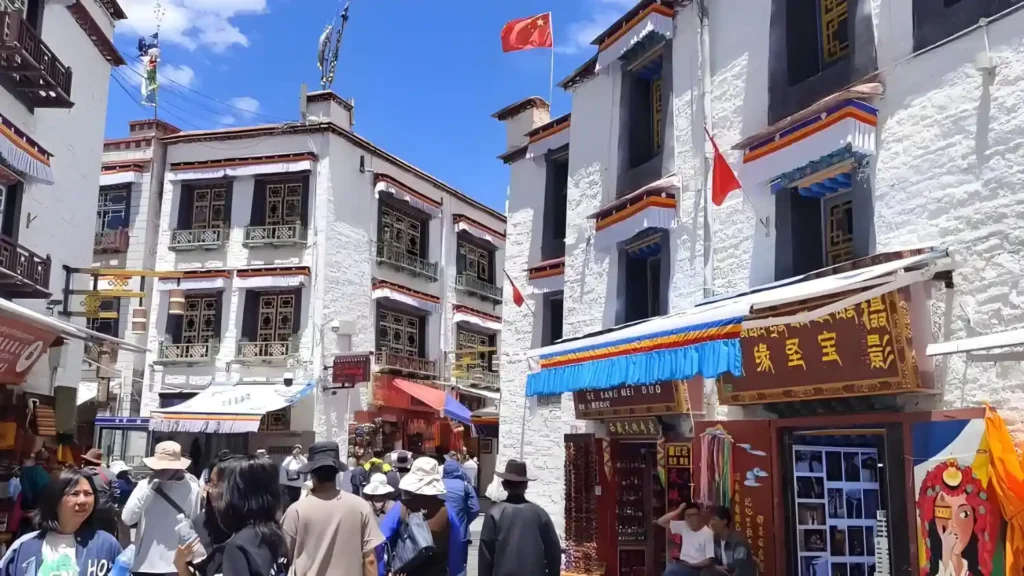
People walking around Barkhor Street
A Detailed Jokhang Temple Walkthrough of the Timeless Halls
Walking from the bright Lhasa sunshine into the Jokhang Temple felt like entering a completely different environment. The sounds of the busy streets outside faded away, replaced by a quieter and more reflective atmosphere.
Inside, the halls were softly lit by rows of traditional yak-butter lamps, their warm glow illuminating the wooden pillars and centuries-old walls. As we followed the clockwise route through the temple, my guide shared stories about its history and significance in Tibetan Buddhism. One story that stood out was the legend of the two princesses and how sacred Buddhist statues were brought to Tibet many centuries ago.
As we moved deeper into the temple, I noticed colorful silk fabrics draped around the columns and pilgrims stopping at different shrines to offer prayers. The low murmur of chanting, combined with the scent of butter lamps, created an atmosphere that felt both peaceful and deeply rooted in tradition.
What impressed me most was that the temple did not feel like a museum or historical site preserved only for visitors. It remained an active place of worship, where local people continue to practice their faith just as generations before them have done.
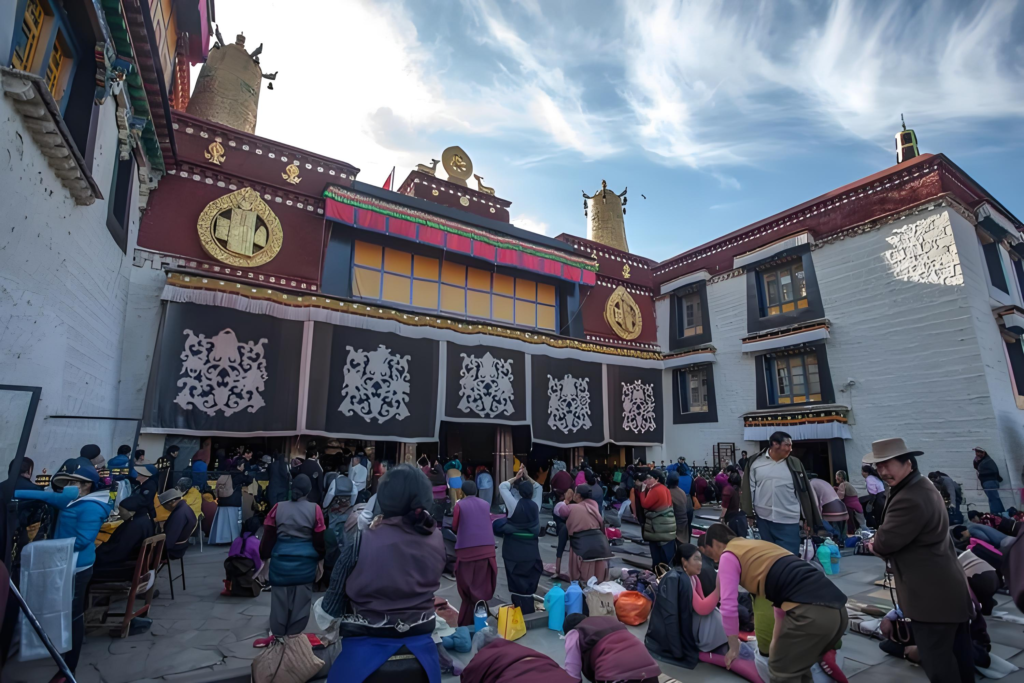
Tibetans are praying in Jokhang Temple
Facing the Sacred Jowo Rinpoche Statue
The most emotional part of the whole walkthrough is to go inside and see the famous Jowo Rinpoche statue (a sacred Sakyamuni statue as well). This life-size statue is of Buddha at age 12 and is viewed as the most holy icon in Tibetan Buddhism.
The line of worshipers edged forward extremely slowly so I had plenty of time to take it all in. The statue is entirely covered in pure gold, bejeweled heavily with gems, and surrounded by piles of offerings.
Standing a few feet away from a holy icon considered a whole other holy land in the minds of millions was truly overwhelming, literally spine-tingling. The pure amount of devotion concentrated in that room is undeniable.
Glimpsing the Potala Palace from the Golden Rooftops
We paid our respects, and made our way up the steep stairs to the open-air upper terraces of the temple complex. The views when we came out into the fresh mountain air were truly breath-taking.
Up on the roof top, I was standing directly adjacent to the amazing sparkling golden roofs of the Jokhang; the gilded bronze works against the intensely blue sky are truly photogenic. The unexpected view is the sweep across the lively old town, west towards and immediately to the spectacular view of the imposing Potala palace over the valley.
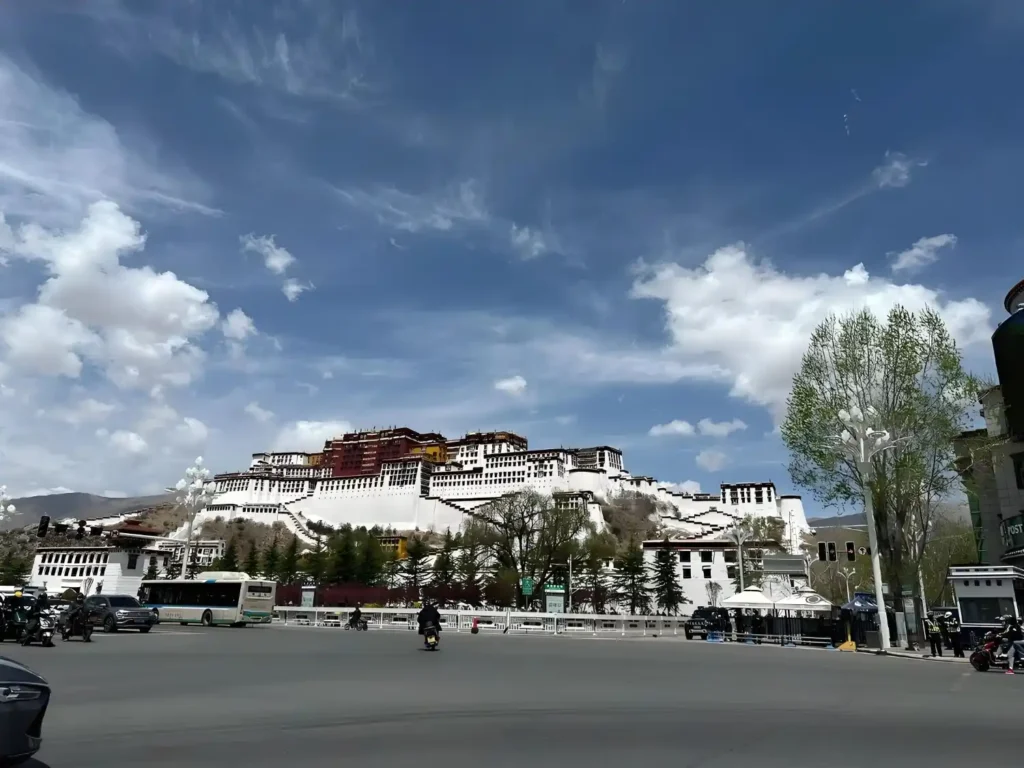
Potala Palace
Final Reflections and Navigating Tibet Tours
We spent roughly two and half hours visiting Jokhang and finishing off the morning by hanging out at a local sweet tea house for an eye-opener on Tibetan social culture.
Experiencing the devout faith of Jokhang Temple is a must in one of the Tibet tours and it gives you the essential introduction for what’s to come out on the plateau as you journey over passes and gaze upon Everest.
If you want an adventure where your soul will be transformed through a journey of culture, the trip is certainly worth all the miles traveled.
3 thoughts on “A Trip to the Jokhang Temple in Lhasa, Tibet: A Complete Walkthrough by Olivia Watson”
Pingback: Dos and Donts for Your First Time to Visit Tibet
Pingback: How to Prevent Altitude Sickness in Tibet: Lhasa Travel Guide
Pingback: Lhasa Pilgrim Circuits: A Guide to the Kora in Tibet