
The first breath I took in Lhasa at 3,650 meters hit me so hard that it felt like inhaling through dry cloth. Back in Singapore, I was used to breathing in thick, humid air. However, most of the moisture vanished from the atmosphere, and my lungs were feeling uneasy because of the struggle against the thin and dry air in Tibet.
As a 26-year-old corporate worker spending most of the time doing office work under the air-conditioning and navigating the ruthless Singaporean morning crowd in Raffles Place, standing on top of the roof and breathing the air felt like nothing I had ever experienced before.
As I joined the locals gathered around the Jokhang Temple that morning, I felt myself fall into the rhythm of this city moving as a collective prayer at a slow and steady pace, yet it was not completely still. Shifting away from a stressful life in Singapore to witness people devoted to their spiritual journeys left me speechless and stress-free for the first time in my life.
What is a Kora in Tibet?
From my own understanding, a kora in Tibet is a spiritual practice that intertwines the body with devotion. As part of the ancient Tibetan ritual tradition, pilgrims walk in a clockwise direction around sacred land, a place or object like a temple, a monastery, a mountain peak, or a fortress. Following these ancient paths gave me insight into how people’s beliefs can live within their daily lives, leading me to explore the four main traditional Lhasa pilgrim circuits.
1. The Nangkhor Kora: Inside the Temple Walls
I found my way to something unexpected tucked inside the heavy, old stone walls of the Jokhang Temple, where very few tourists know about: the Nangkhor kora Jokhang. It’s an interior walkway that weaves through low stone corridors built way back in the 600s, forming an intimate, sacred loop around the heart of the temple.
As I made my way through it, I was surrounded by tens of thousands of butter lamps with familiar, warm light completely different from the buzzing fluorescence of the office I worked in. The moment I witnessed Tibetans praying in front of the life-size golden statue of the young Jowo Sakyamuni Buddha, I felt an indescribable sense of being so close to Tibetans as they pray.
2. The Barkhor Street Kora: Pulsing with the Heartbeat of Old Town
Stepping outside the heavy gate, we found ourselves wondering into energetic old town street, where the famous Barkhor Street Kora begins. As I walk through the path, I was following the main loop wrapped around Jokhang Temple outer wall. Under the clear plateau sky, I watched pilgrims performing rhythmic full-body prostrations across the stones.
To walk this historic circuit respectful, you have to follow in the locals’ footsteps, keep your body on right side of the temple as you walk in clockwise direction and let yourself be swept into the rhythm of the crowd.
**Choosing the Best Time to Do Lhasa Kora Walks: From my personal experience, 7:00 AM to 9:00 AM is the best time to do Lhasa kora walks. The old quarter wakes up early and hum quietly with the footsteps of the locals, long before the tourist chatters begins and souvenir stalls open
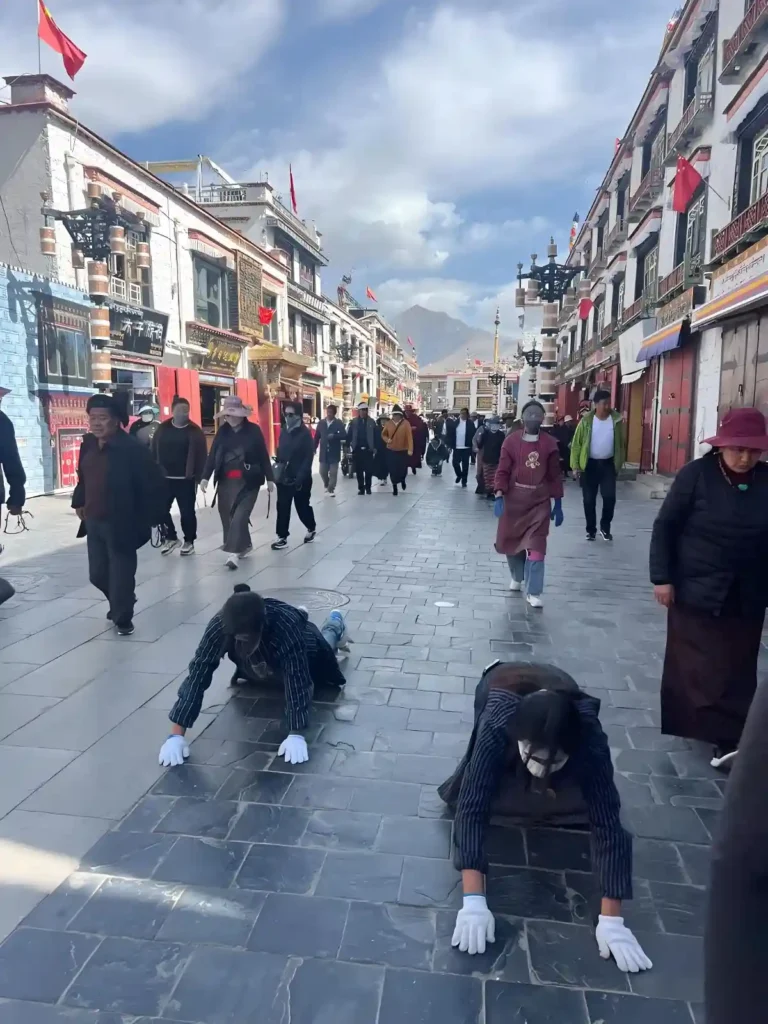
Tibetan Performing Lhasa Pilgrims Circuits in Barkhor Street
3. The Potala Palace: Walking Under the Tsekhor Potala Palace Circuit
At the heart of the old town, the path around the giant Tsekhor Potala Palace circuit forms the entire boundary of the red hill where the winter home of the Dalai Lamas is. Rows of copper prayer wheels run along the footpath like a shining mental river against the cliffs.
As I walked this circuit in the evening, the sunset went down and turned the massive palace walls a brilliant blood red; I saw local people, all having their share of turning the copper prayer wheels as part of a spiritual ritual after their work hours, which is a beautiful spiritual routine that takes about 45 minutes to finish.
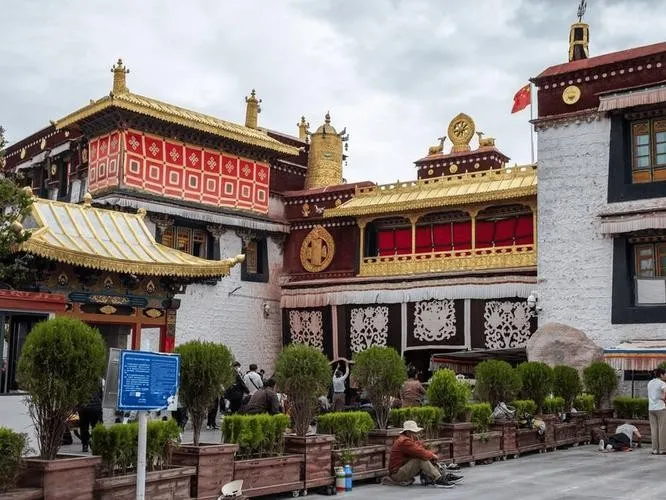
Potala Palace in Lhasa
4. The Lingkhor circuit: The Ultimate Outer Bound
Stepping into the Lingkhor circuit route felt like entering an ancient city and pushing my physical limits. This historic 8-km loop marks the furthest boundary of old Lhasa; it passes beneath the shadow of the Potala Palace and circles Chakpori Hill. Willow trees arc elegantly over walkways next to old water channels as the roar of modern traffic fades to silence.
**Altitude Warning: Because any Lhasa kora walk, especially in the 8 km of the Lingkhor circuit routes, takes place at high altitude. I would highly recommend that you spend a minimum of three to four days adapting to the altitude of Lhasa to keep your lungs and heart healthy before taking longer routes.
Practical Tips: My Personal Rules for a Respectful Travel Experience
- Dress with Absolute Respect: Make sure that your outfit covers your ankles and shoulders while performing pilgrims at any Lhasa kora walk. While entering the inner chapels of temples, remove your hat, sunglasses, and wireless ear pieces out of respect.
- Mindful Photography Etiquette: Never take pictures of others when they are praying. Keep a distance to ensure that they are praying in peace, and always ask permission before taking any pictures.
- Bargaining on the Barkhor Street Kora: As the sun goes down, the market stalls along the outer Barkhor Street kora loop begin to hum. If you want to buy traditional thangka paintings or hand-crafted prayer wheels, bargaining with the sellers is expected.
Ready to Experience the Magic of Lhasa Firsthand?
I can honestly say that great sense of peace finds you while being on these trails. Taking a break from the office at 26 to experience this completely relaxed my mind from the city burnout in a way typical beach holiday can never do.
If you are already imagining yourself trekking on the trails in Tibet, remember that international traveler does not have the freedom to roam around freely due to regional permit regulation.
To truly experience Tibet, it would be best to rely on local experts that can help design your personal holiday, book the necessary accommodations and also take care of all permits, including the Tibet permit.