
The moment you step off the plane or train and take a deep breath in Lhasa is unforgettable. The fresh air, dramatic mountain backdrops, and vibrant prayer flags let you know that you’ve finally arrived in the heart of the rooftop of the world. However, sitting at an altitude of around 3,650 meters (11,975 feet) means that Lhasa has about 35% less oxygen than what you usually breathe at sea level. If you are wondering how to avoid altitude sickness in Tibet, the answer depends entirely on how you manage your first 24 to 48 hours.
Essential Lhasa Altitude Acclimatization Tips for Your First Hours
Your physical adjustment starts the moment you step onto the tarmac or platform. Adrenaline starts pumping, and you start exploring and rushing at every opportunity you get, but you have to force yourself to slow down continuously.
Move at half your normal pace, and try to avoid carrying heavy luggage or bags, if possible, since your body struggles to pump oxygen to your organs. Therefore, implementing these Lhasa altitude acclimatization tips can help your body adjust significantly more smoothly. You can save this excitement after a couple of hours of adjustment; take it slow and steady in your first few hours.
Arriving in Lhasa Altitude Adjustment: Why Rest Comes First
After you’ve checked into your hotel, don’t just throw down your bags and luggage and race toward the Jokhang Temple or Potala Palace. Instead, just stay in your room and lie on the bed for at least 4 to 6 hours. Even though you feel completely fine, the physical stress from the high elevation can take several hours to hit you.
Giving your cardiovascular system some time to adjust to the high altitude and to stabilize is one of the most effective ways for a smooth arrival in Lhasa and altitude adjustment. Spend the afternoon reading, napping, or doing whatever you like to relax in your room.
How to Prevent Altitude Sickness in Tibet Through Diet and Hydration
Your body automatically speeds up your breathing rate at such an altitude, in the extremely dry air, to adjust to the lack of oxygen at the high elevations of the Tibetan Plateau. As a result, your body loses water rapidly from every breath you take; eating plenty of food and keeping yourself hydrated is one of the best ways on how to prevent altitude sickness in Tibet.
Drink three to four liters a day, and consider getting some electrolytes in your diet or enjoying some local Tibetan sweet tea. Meanwhile, keep your meals light and eat carbohydrate-rich meals, such as noodles, rice, or potatoes, because high-carb food requires less oxygen from your body to digest than high-protein food, which keeps you active without draining your energy too much.
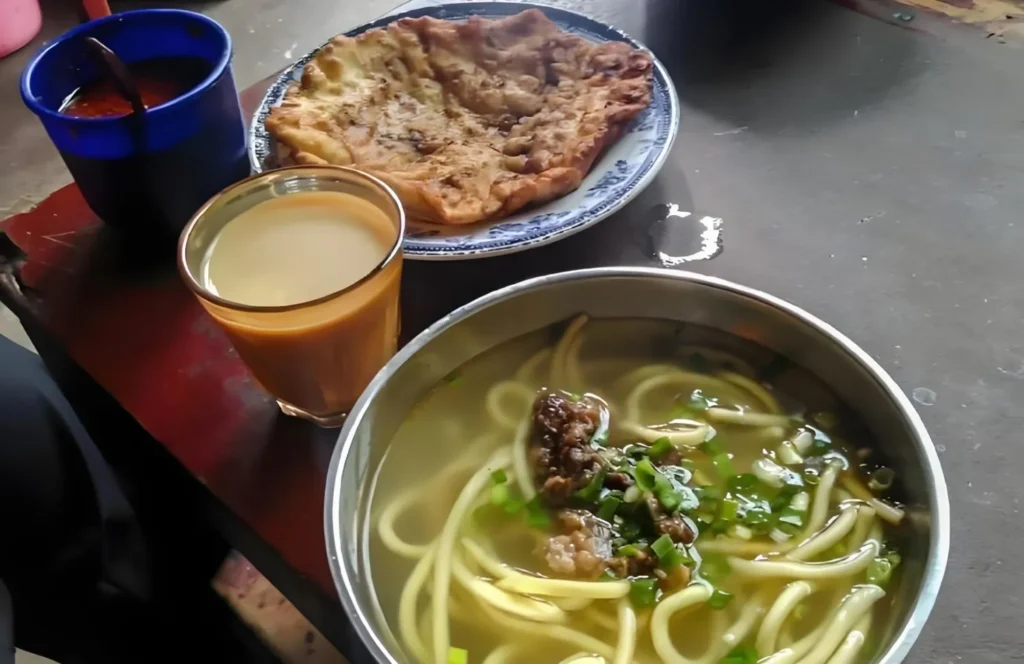
A sample of Tibetan Food
Your Secret Tibet Travel Altitude Guide Rule: Skip the First-Night Shower
Skipping a hot shower on your first night in Tibet may seem challenging, but it is very crucial advice for a smooth Tibet travel altitude guide. Taking a hot shower or bath on your very first day may expand your blood vessels, which will increase your heart rate and cause your blood pressure to drop. As a result, you may experience severe headaches or dizziness due to a lack of oxygen.
Additionally, getting cooled off too quickly after showering can increase your chances of catching a cold, which is bad for your respiratory system’s ability to get oxygen. It is much better for you to wait for two to three days until your body adjusts.
Preventing AMS in Lhasa by Avoiding Alcohol and Sedatives
It may be very tempting to celebrate your arrival with some cold drinks, but avoid any alcohol for the first few days at high altitude. Alcohol is a respiratory depressant, which actually slows down your breathing rate and may even cause oxygen deficiency, causing your body to dehydrate further.
Avoiding alcoholic drinks or similar substances is crucial for preventing AMS in Lhasa, and this includes sleeping tablets and sedatives too. If you have trouble sleeping due to high elevation, it is much safer to rely on natural acclimatization or consult your doctor in advance about prescriptions like Acetazolamide (Diamox) than anything else.
Do not drink alcohol on your first day in Tibet.
Listen to Your Body and Know When to Alert Your Guide
It’s common to have mild headaches, slight dizziness, and feel slightly out of breath while walking upstairs in Lhasa’s high altitude, and these are temporary effects and are manageable. The golden rule is to let your body adjust naturally before relying on a portable oxygen canister for minor discomfort. In fact, overuse of oxygen slows down the reproduction of red blood cells.
However, there are some red flags. For example, if you are experiencing uncontrollable vomiting, severe headaches that require medication, extreme exhaustion, or even a rough cough, tell your tour guide immediately, as they are highly trained in altitude illness.
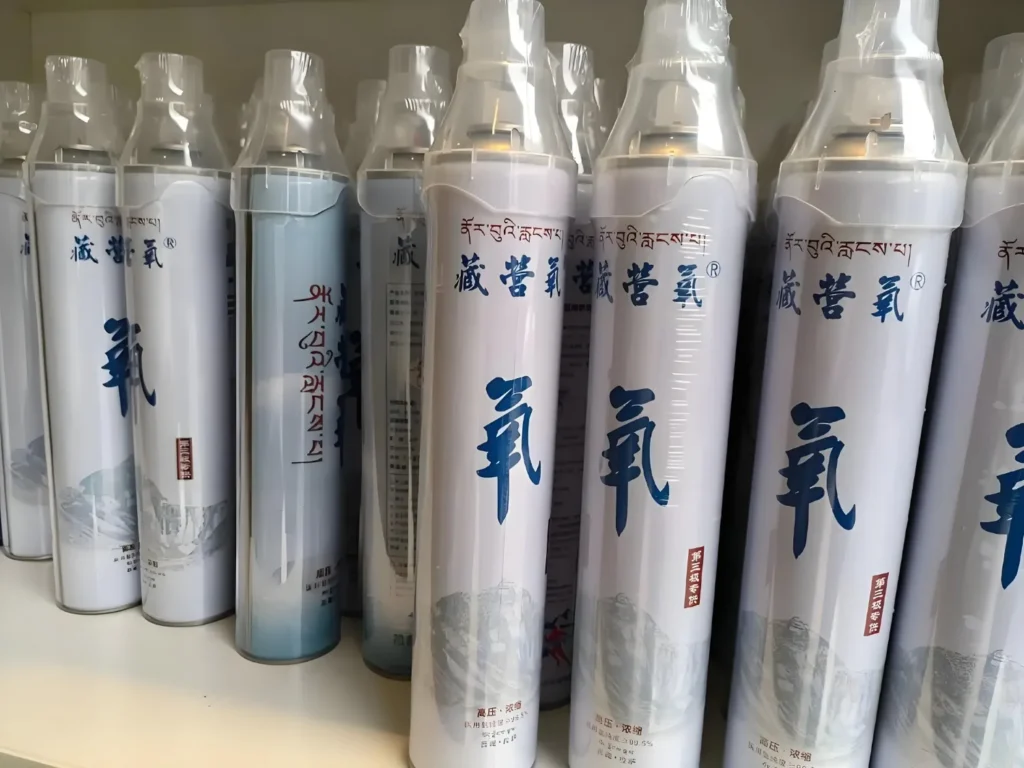
Samples of Oxygen Canister
Conclusion: Embrace the Slow Pace for an Unforgettable Journey
The trick to avoiding altitude sickness in Tibet isn’t about forcing your body to adapt. Instead, it’s about giving time, hydration, and rest to adjust to the rooftop of the world naturally. By taking it easy during the first 48 hours and following these guidelines, like skipping the first night shower and avoiding alcohol, you’ll be able to start your journey with ease.
Listen to your body, let your local guide know how you’re feeling, and embrace the slower path of life on the high plateau. Once you’ve adjusted to the high altitude, you’ll have all the energy to explore!