
Being atop the Roof of the World with the sun drenching the gold-plated roofs of Lhasa in morning glory or witnessing your very first look at the mighty North Face of Mount Everest-it’s the ultimate adventurous experience to witness in one’s life. Nonetheless, it’s slightly more intricate than a normal journey due to Tibet’s geography and exclusive government rules.
If you are planning on travelling to Tibet in 2026, entry to the Land of Snows has seen a dramatic and exciting change. Apart from a set of rules that have remained timeless, a couple of outstanding new perks will make your journey to the plateau the smoothest, most fascinating experience possible. To make sure it is exactly that, here are 10 things you should know before touching down on the plateau:
1. Can Foreigners Go to Tibet Right Now?
Undeniably, the biggest query by far from most foreign travelers is the simple question: “Can foreigners go to Tibet given all of the restrictions in the region?”
The answer, quite simply is, “YES!” Tibet is readily welcoming international visitors. In fact, in some instances, if your nationality falls within one of the many nations where mainland China offers an extended visa-free entry scheme, stepping foot into mainland China for your journey may even be cheaper and simpler than it has been in generations. Nonetheless, the visa/visa-free entry stamp to mainland China is just one leg of the journey.
2. Navigating the Ban on Independent Travel to Tibet
If you usually just buy a single one-way ticket, turn up at a hostel and look around yourself for wherever the roads may lead, you may have to rethink. It is currently absolutely impossible for non-Chinese passport holders to independent travel to Tibet other than pre-arranged tours into the autonomous region.
You can’t even book your own train tickets to Lhasa, stay in whatever guesthouse you fancy, or venture outside town on your own. As independent travel to Tibet is illegal, your entry into Tibet is actually prevented by checkpoints if you haven’t got a pre-arranged tour to show, but this hurdle is not at all difficult to overcome by arranging one of the Tibet tours!
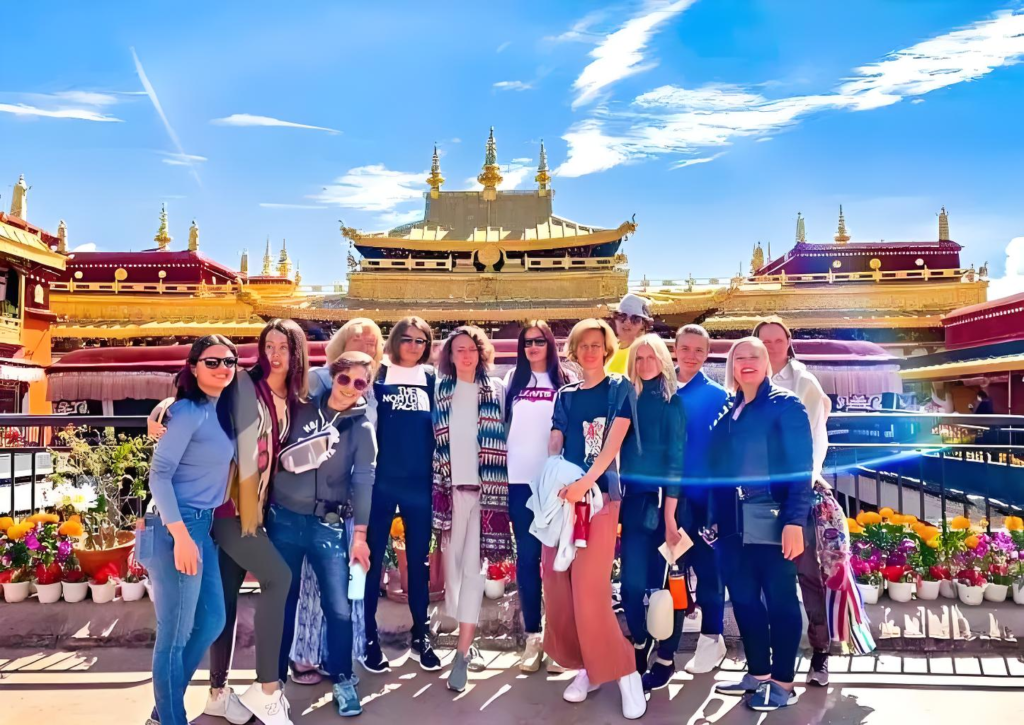
Foreginers in Tibet Group Tour
3. Choosing the Right Tibet Tour Packages
As traveling alone isn’t possible for non-Chinese citizens, your whole journey depends on which package you chose. A Modern Tibet tour packages can vary from a small, budget-friendly group tour, focusing the highlight of Lhasa to larger overland touring, and covering the journey to Mount Everest or Mount Kailash. By choosing an approved travel agency, licensed drivers, pre-checked highland tour vehicles and the licensed local guide are covered.
4. Securing Your Mandatory Tibet Travel Permit (TTP)
For getting to the plateau train or flight and for passing through local check-points to enter Lhasa, one needs a physical printed copy of their accepted permit. The order of this workflow is:
Entry to mainland China (Visa/Visa Free) -> Tibet travel permit is issued -> Board Train/Flight to Lhasa
Though the permitting procedure itself is very strict, ironically it is not at all complicated for traveler. One cannot get permits themselves from a government office and there is only the designated agency to apply on behalf of you. You are only required to scan and provide a clear scan of your passport page to the agency where you book Tibet tours in about 35-40 days prior to the date of departure. A paper permit will be delivered directly to the traveler’s transit hotel in mainland China.
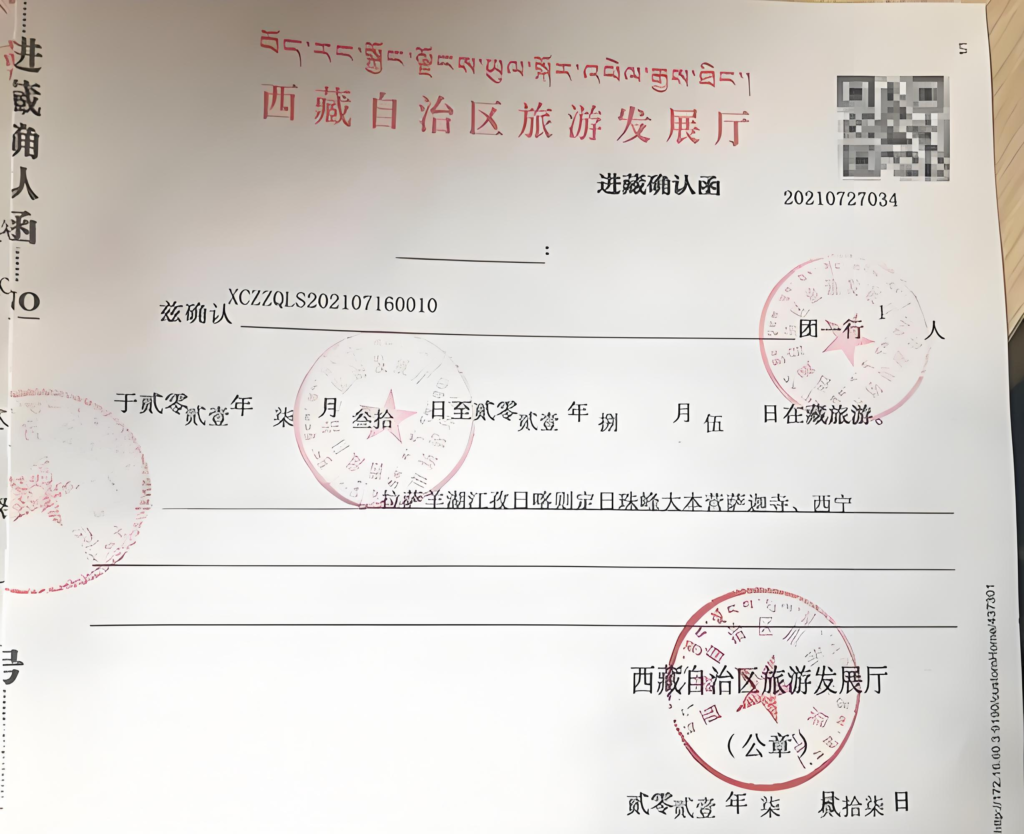
A sample of Tibet Travel Permit (TTP)
5. Packing for Extreme Weather and the “Two-Season” Days
One of the biggest surprises for foreigners traveling to Tibet in 2026 is the sheer volatility of the weather. Due to the extreme altitude, the temperature can fluctuate by 20°C in a single day, meaning you can experience two distinct seasons in less than twelve hours.
- The Layering Rule: Even in the middle of summer, temperatures drop significantly as soon as the sun goes down or when you travel to higher elevations like Yamdrok Lake or Everest Base Camp. Pack high-quality thermal base layers, a fleece jacket, and a windproof, waterproof outer shell.
- Footwear and Accessories: Sturdy, broken-in walking shoes are mandatory for navigating steep monastery staircases, while lightweight gloves and a scarf will protect you against biting mountain winds.
One of the biggest surprise foreigners might feel when visiting Tibet in 2026 is the unpredictable nature of the weather. The elevation means that the temperature could vary by 20°C in a single day, in which case you will essentially witness two different seasons within twelve hours.
- Rule of layering: Even in mid-summer, the temperature drops noticeably as soon as the sun is out of sight, or when you travel to a higher destination such as Yamdrok Lake or Everest Base Camp. To prepare this trip, you will need to bring high quality thermals as base layers, fleece jacket, and a wind + water-proof outer shell jacket.
- Shoes and Accessories: Strong, well broken-in shoes are necessary especially for climbing steep temple stairs, and lightweighted gloves and a scarf will defend you from fierce wind.
6. Shielding Yourself from the Intense Plateau Sun
The atmosphere on the Tibetan plateau is extremely thin and the UV radiation high. It is easy to get sunburnt and damaged in only a few minutes even though the air might be crisp and cool. Take a very strong factor sunscreen and lip protection, polarized sunglasses and a wide-brimmed hat without fail for wandering round monasteries outside.
7. Acclimatization and Respecting the Altitude
Lhasa stands at an incredible 3,650 meters above sea level, and famous spots like Everest reach far above this. Acute Mountain Sickness (AMS) is a genuine risk, but very much controllable if you treat the landscape with respect.
- Take it easy: Use your first 48 hours for relaxing and strolling around, avoiding any physical stress on your body so it can make a sufficient quantity of red blood cells.
- Rehydrate: Don’t touch alcohol for the first couple of days and try and drink double your normal amount of water to counteract the dry, thin atmosphere.
8. Flying vs. Taking the High-Altitude Train
Your method of transport to Lhasa affects your comfort level. Although the train journeys, exceeding 40 hours, from the Chinese mainland are breathtaking, they do not prevent an episode of altitude sickness as the train carriages are under oxygen-suppressed air until well into the high plateau. Flying to Lhasa is quicker but immediately imposes a massive altitude have a great impact on your system. Whatever you choose, planning at least two to three days in Lhasa at the beginning of your Tibet tour packages for rest and adaptation is essential.
9. Cultural Etiquette and Religious Customs
The influence of Tibetan Buddhism is inseparable from everyday life on the plateau. As a respectful traveler, it is important to be aware of local taboos:
- Temple Etiquette: You should always go around shrines and chortens in a clockwise direction (kora) at sites such as the Jokhang Temple or Potala Palace. Remove hats and sunglasses within chapel rooms and avoid pointing with a single finger (open palm is acceptable).
- Photography Restrictions: Always get permission before taking photographs of locals, and particularly monks. Photography is not permitted in the inner chapels of most monasteries
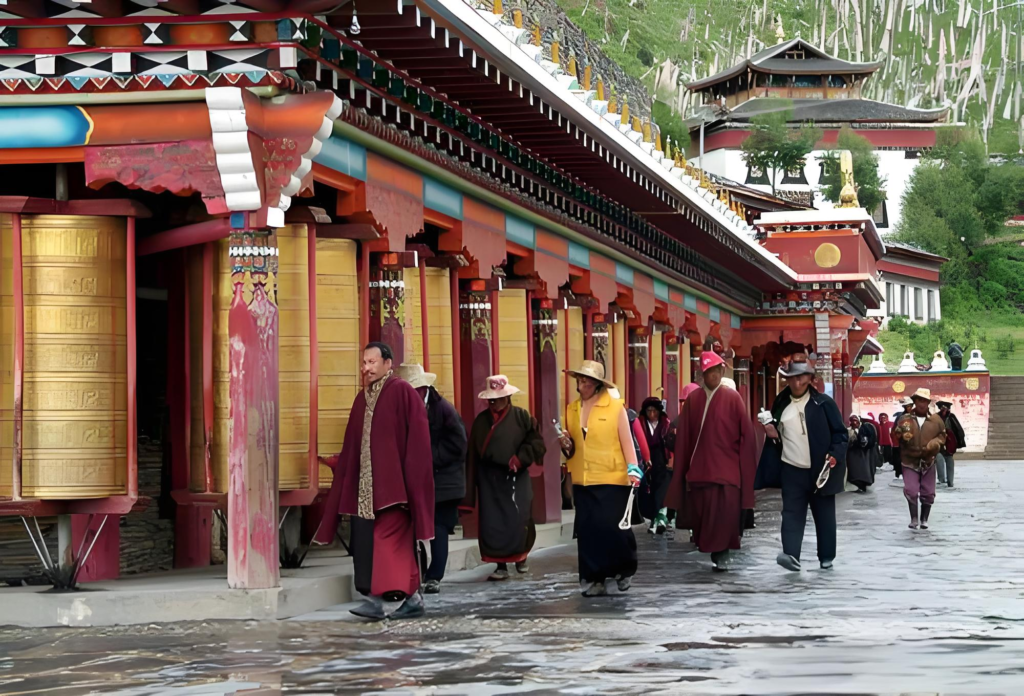
Group of Tibetan Performing Kora in Labrang Monastery
10. Digital Access and Monetary Preparations
All these features of the digital infrastructure of mainland China is also available in Tibet. Because of this people practically don’t use cash and international credit cards in Tibet.
• Mobile Payments: Please prepare Wechat pay or Alipay account before entering to mainland China, and set your international payment information into your Alipay, so you can use every day.
• Internet Connection: if you wish to have an access to western social networks, messaging applications or business platform, download and install an appropriate VPN service before entering mainland China and/or purchase international SIM with data traffic for travelling.
Final Takeaway: Is the Planning Worth It?
While navigating the rules, checking off permit timelines, and adjusting to the ban on independent travel to Tibet takes a few extra steps, the payoff is beyond words. Watching local pilgrims spin prayer wheels on Barkhor Street or standing before the immense white peak of Everest are transformative experiences that stay with you forever.
If you are serious about traveling to Tibet in 2026, find a reputable tour operator early, lock in your dates to allow ample time for permit processing, and get ready for the trip of a lifetime!
1 thought on “10 Essential Things to Know Before Traveling to Tibet in 2026: A Guide for Foreigners”
Pingback: A Trip to the Jokhang Temple in Lhasa, Tibet: A Complete Walkthrough by Olivia Watson -