
Your Mandatory Tibet travel permit 2026
1. DO book your tour at least a month in advance
The first travel detail you will need to be aware of when visiting the Tibet Autonomous Region (TAR) is that independent travel for international visitors is not allowed; you’ll need to arrange your trip with a licensed tour operator that draws up a valid itinerary, will arrange a private driver, guide, and, most crucially, will organize the red tape.
China’s recent significant relaxation of its free-visa scheme will cover a large number of nationalities this year, but remember, free visa access does not mean free access for your trek! You’ll have to have already obtained your Tibet travel permit 2026, and it would be a good idea to leave between 20-30 days for your travel agency to process the paperwork on your behalf.
Acclimatization and Altitude sickness in Lhasa
2. DO spend your first 48 hours doing absolutely nothing
The altitude of Lhasa is 3,650 meters (11,975 feet) above sea level, and your lungs will definitely register the high altitude right away as soon as you arrive in Tibet. To avoid altitude sickness in Tibet, take a rest for the first two days and keep yourself hydrated. No intensive treks or physical activities. Drink plenty of water, avoid alcohol, and let your body adjust by taking small steps. Giving your body the first few days to take control of altitude sickness in Lhasa makes the remaining trip easy.
3. DO follow local routes on your first visit to Tibet
Whether you find yourself wandering around the stone pathway of Barkhor Street, walking through Jokhang Temple, or even just passing by a stupa (a white, domed-shaped Buddhist shrine), make sure to walk in a clockwise direction, also known as kora. On a first time visit to Tibet, join them in a kora to keep you in harmony with thousands of local pilgrims.
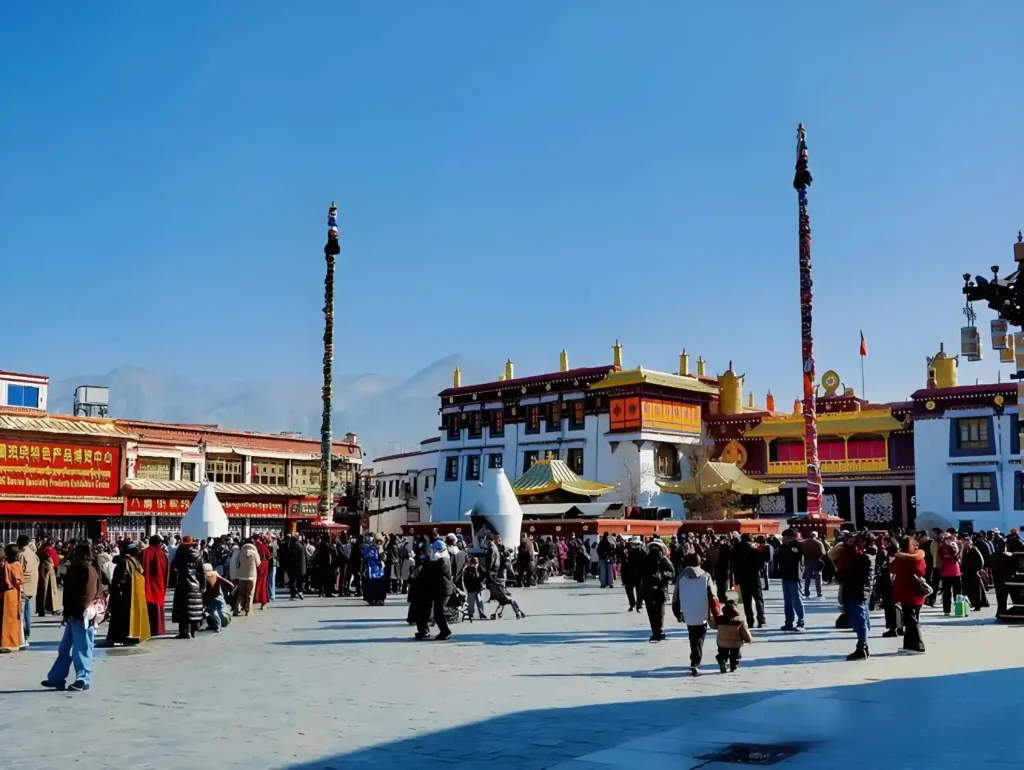
Barkhor Street in Lhasa
4. DO layer your clothing like a pro
Tibetan plateau’s weather changes like crazy! A stunning 5°C (41°F) can change quickly to 20°C (68°F) or above by mid-afternoon due to high elevation sun. Ditch the heavy jackets for a high-quality base layer, fleece mid-layer, and a windproof outer, which you can put on and take off depending on the weather of the mountain.
5. DO try the local sweet tea and yak butter tea
For your first time to visit Tibet, food and community are a huge part of life in Tibet. Step inside a bustling teahouse in Lhasa and order a sweet milk tea or traditional po cha (yak butter tea). These are great calories to boost your energy to cope with altitude sickness in Lhasa and the climate, as well as a hub for local Tibetans to socialize, laugh, and relax.
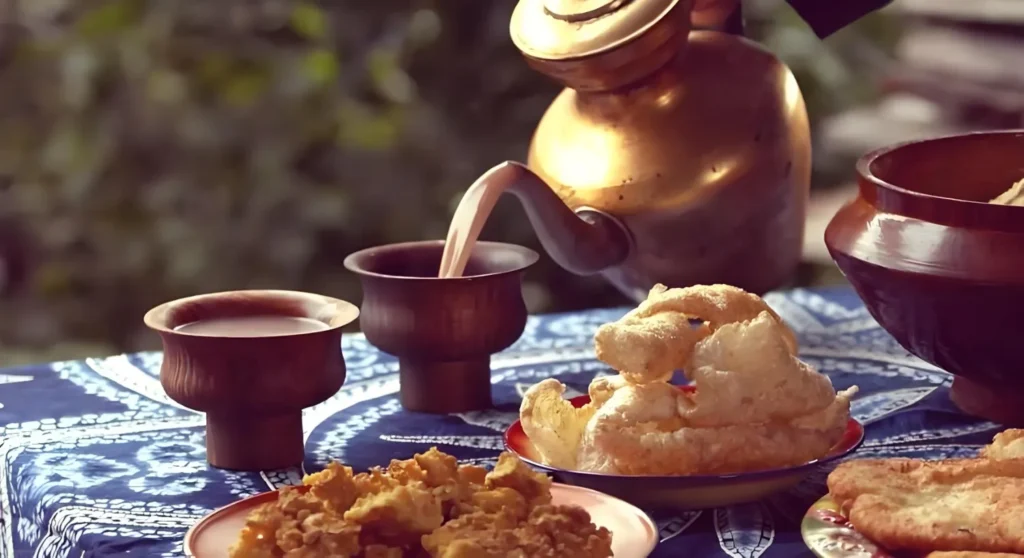
Yak Butter Tea
5 Absolute “Don’ts” to Avoid Trouble and Offense
Master Tibetan monastery etiquette
1. DON’T travel without your physical, original permit
You won’t be able to board a flight or a high-altitude train to Lhasa from mainland China or Nepal without showing your physical paperwork. A PDF file or a screenshot of your Tibet Travel Permit on your cell phone will not work at the strict security checkpoint. Your hard copy of the Tibet travel permit must be carried around with you at all cost. Treat this two-page paper document like you would with your passport to avoid any unexpected disruption to your trip.
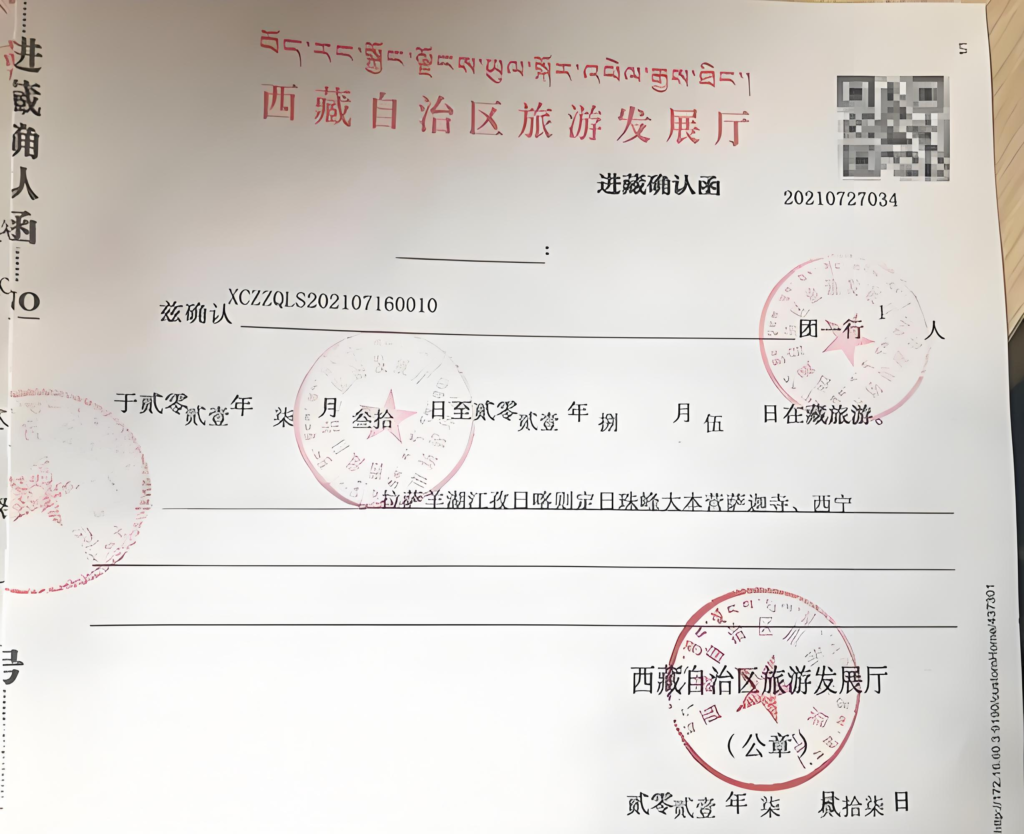
Tibet Travel Permit (TTP)
2. DON’T ignore local Tibet travel restrictions on photography
The surroundings filled with old temples and sacred images here will leave you speechless, but sometimes it is wiser to lower the camera. In most monastery sanctuaries, taking pictures is strictly forbidden due to Tibet travel restrictions and religious customs. Keep an eye out for signs and ask your guide before taking any pictures. In addition, never take a picture of military personnel, checkpoints, or police stations, as violating this Tibet travel restriction can result in the confiscation of your equipment.
3. DON’T point with a single finger
Inside holy places, your body language, especially your hand gestures, matters in Tibetan monastery etiquette. Pointing fingers at someone, let alone statues of Buddha, altars, or monks with your index finger, is considered rude and aggressive. Instead, point with an open palm to show a respectful and welcoming gesture in traditional Tibetan monastery etiquette.
4. DON’T wear revealing clothing to monasteries
In these monasteries, prayer happens every day, and it’s not just a tourist attraction. To show proper Tibetan monasteries etiquette, leave shorts, shorts skirts, and sleeveless tops at the hotel. Make sure to remove your hat and sunglasses before entering the temple so that monks and worshippers can see your face.
5. DON’T step on the thresholds of temple doorways
When passing by the thick wooden entrance of a Tibetan chapel, there’s a wooden beam at the base of the frame. Never step on top of the entrance; always step over it. In local tradition, stepping on the entrance violates Tibet monastery etiquette and is equivalent to stepping on the shoulder of temple’s guardian.
Conclusion: Embrace the Journey
Travelling to Tibet feels nothing like going anywhere else. Getting there requires a slower movement to handle altitude sickness in Lhasa, and an open heart to explore a beautiful, ancient culture. There are some experiences that stood out from the rest, like facing the towering red-and-white walls of Potala Palace and watching the sunset of the Himalayas, which you can never experience anywhere else.
By following these 5 dos and don’ts, not only will you stay safe while travelling, but you will also experience the beauty of the local community on your very first visit to Tibet. Pack your windproof jacket and keep track of the changes in Tibet travel restrictions, and get ready for a truly transformative adventure on the Roof of the World.
1 thought on “Dos and Donts for your First time to Visit Tibet”
Pingback: Authentic Cultural Experiences in Tibet: A First-Time Guide